Monday, October 26, 2009

Punjabi Poetry Festival, New Mumbai, 25.10.09

Wednesday, April 29, 2009

2009: Year for Painting


In this year of 2009 I am spending all my free time for oil painting. I am working on creating a series of paintings with the theme 'GURBANI'. At the end of year 2009, these will be exhibited in Artmosphere Gallery at Ludhiana. Here are icons of some of creations. The size of each canvas is mentioned on them.
These images are available in my Flickr Photo Gallery also. For commenting on any individual painting you may click here.

Monday, April 27, 2009

English Translation of Some Poems


Nanak

Excuse us
It’s quite hard for us
to envisage the true image of Nanak
Legs messed up with the dust of the winding path
Cracked heals
Beard entangled by turbulent winds
Skin toughened in arid-cold seasons
Concave and skinny cheeks
Eyes popping from the facial bone structure
dazzling & renegade
Eyes, which refute-
the hierarchy
the monarchy
and clergy

The real Nanak can prove fatal to us
That Nanak, who we can’t even dream
He can
destruct our homely institutions
lead our children into the throws of non-conformism
Can create quests
to point our feet towards Kaaba
Consequently
we can be injured and amputated
We may be motivated for many more wrong deeds
For instance

We may perceive the irrelevance of religious symbolism
we may bring out a manifesto
to divert the flows
to challenge propriety

We are wary of this preposterous Nanak
All we want is

success
succor
solace

We desire luxurious graces
familial blessings
and promotion and progress
in terms of wealth

Nanak depicted by Sobha Singh’s school of portraits
is well suited for us
White Sun-Silky beard
spherical shining cheeks
Fair and Lovely
rosy Tipsy lips
soft Gemini feet
delicate Barbie hands
Arielly cleaned messianic robes

The walls of our homes can only hold
Nanak
in the pictures of Sobha Singh’s style

The true picture of dangerous Nanak
who rejected the well-traversed paths
is too momentous for our walls

Excuse us
we can’t afford ruining of homes
those we created with labour of blood
We can’t afford losing kids
those we got with prayers

We can not envisage the real image of Nanak
Excuse us please

Translation : Manpreet a research scholar at JNU
Jasdeep, a software engineer


Bhagat Singh

When my grandfather was born you were 12 years old
Saluting with reverence
the sacred soil of Jallianwala

When grandfather was 12 years old
you attained martyrdom at the age of 24 years

When he attained the age of 24 year
You were still a youngman of 24 years

When my father came of age
You were still a youngman of 24 years

When I was of 24 years
You were still a youngman of 24 years

I attained 25, 26, 27, ….37 years of age
You remained a youngman of 24 years

On my every birthday
I march towards old age by one year
But on your every martyrdom day
You remain a youngman of 24 years

Every mother blesses her son
For long life and youthfulness
But indeed you are ever living youngman
Enjoying eternal youth
You will be of the same age as ever
when any coming generation will attain youth


Bureaucracy

In a first class waiting room
of a railway station in a mega city
There is a struggle for some space.
Outside the room, a ‘Frowning Brow’
occupies an old rickety chair
unmindful of the plight of the passengers.

The frowning brow instructs every new comer
to fill in the details of the railway ticket.
The erect index finger orders to
fill all the particulars correctly.

In case someone tries to gatecrash
he is browbeaten.
The frowning brow starts emitting sparks
on noticing a lower class ticket
then the dirt on the sign plate
hung on this waiting room starts shining.
The erect index finger points towards this plate
the lower class ticket is
put to shame and is turned away.

The frowning brow soften a bit
on seeing a vender
and make this ticket-less
to sneak into waiting room.

The frowning brow is official
regular, confirmed and established
belongs to class four
but is above class one passengers
so the first class passengers are class five.
What is the class of other categories
can be asked from
the condition of washroom
inside this first class waiting room.

Death

Whenever I am frolicsome..... smiling...... in dancing mood
Happy with work....... engaged in small talks
Death seems to be keeping pace with me
from a small distance
We exchange glances lovingly
I feel her face so pretty
that allures me as does life
No question of fears and apprehensions

When I am..... idle....... depressed
In low spirit....... disheartened
Annoyed even with God and everyone else
Death seems keeping
a long distance from me
Her face looks sullen and sulky
Averted a bit from me
At that time
She seems to me ugly as life
Fear of death runs through my spine
Translation: Prof. Niranjan Tasneem

Zero

we are the present
of an ancient civilization
that invented zero
zero closed from all sides
it has become our mantra
it got rooted in our blood
or is stuck in our mind
zero can be of any size
small, big, bigger or the biggest
but remains a zero
does not possess any value
but if it follows something
zero makes it ten times
it follows four
and makes forty
it follows seven and makes seventy
zero feels proud in following others
zero does not matter at all
if it leads something
we feel secure
being a zero
like zero we are accustomed to
follow others
sometime we thought to follow
a mercurial left side digit
and to be heavy amount
but the left sider vanished itself
and we were left alone
a mere zero again
we can't ask our baba
baba, the traveler of novel paths
to give us strength
to travel new paths
because we can
follow round paths like a zero
but can't look to discover new paths
can't fly in the endless sky
can't take a free flight
like a satellite
we can rotate in fixed orbit
like a zero
our path can be
circular or elliptical
the same past and future
we can't think of
a parabolic path
we are scared of
infinite and limitless future.
Translation : Jasdeep

Monday, March 30, 2009

Punjabi Poetry Functions in Kolkata

Sahitya Akademi, New Delhi the prime body of Indian writers and scholars organised two Punjabi Poetry Programmes in Kolkata.The first function was on 27th March 2009 in Sahitya Akademi Auditorium in Jeevan Tara area. Dr. Ram Kumar Mukhopadhya welcomed the poets and audience. Dr. Sunil Gangopadhya inaugurated this function. Dr. Sutinder Singh Noor presented the Punabi poets Dr. Manmohan, Neetu Arora, Dr. Surjit Patar, Dr. Vanita and Jaswant Zafar one by one. The poets presented the English / Hindi translation of their selected poems.

In addition to Hindi translation of two poems, I recited English versions of three poems translated by Prof. Niranjan Tasneem.

The second function was in Khalsa English School on 28th March 2009. Dr. Deepak Manmohan Singh introduced the poets, Dr. Rawail Singh coducted the programme. Dr. Vanita, Jaswant Zafar, Manmohan, Sadhu Singh Shudrak, Neetu Arora, Devinder Kaur and Surjit Patar recited their poems. Nachhatar presented his Punjabi short story. Dr. Sutinder Singh Noor Presided over the function. Dr. Ram Kumar Mukhopadhya proposed vote of thanks.


Monday, November 17, 2008

International Poetry Festival


(Click on each image to view in large size)
Above are some glimpses of International Poetry Festival held at Chandigarh on 14-16 Nov. 2008. It was great to participate in this festival. The festival was organised by Kritya. I had the opportunity to present the translation of Peter Waugh's poems along with my own Punjabi poems.

Saturday, September 27, 2008

Photo Exhibition

Exhibition of my photos was organized from 27 Sep to 13 Oct. 2008 in Ludhiana . Followings are the links for related news clippings:

Report in Hindi


Monday, August 18, 2008

General Body Meeting of PSEB EA

I had the privilege to conduct the General Body Meeting of PSEB Engineers' Association held at Punjabi University Patiala on 30th September 2008.

Thursday, June 19, 2008

Making of House

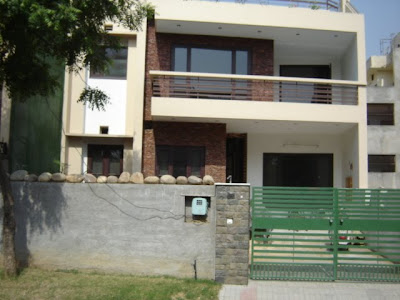
In these days, I m going through the experience of constructing a small house for my family. I could write some poems on this experience. Two of these have been posted in my Poetry Blog. This blog is in Gumukhi letters i. e. AnmolLipi font. The link for downloading of AnmolLipi font has been provided there at right top corner of that blog. Enjoy..

Friday, June 01, 2007

New Book of Articles

Almost all Punjabi articles writen during last 2 years have been posted in my blog PUNJABI LEKH. You are invited to view. If there is some font problem the link is provided there for down loading AnmolLipi Fonts. Following is the list:
• Kabir, The Great
• Dark Side of Urban Diwali
• Nature Consciousness in Gurubani
• On Sarsa Controversy
• Shahid Bhagat Singh
• Nand Lal Noorpuri
• Importance of Trees
• On Guru Nanak Paintings
• Water, The Father of Life

Chetna Prakashan, Ludhiana has brought all these articles in the book form. The title of the book is "SIKH SOU KHOJ LAHEY".

Report in English

Reports in Hindi

Monday, December 18, 2006

Chennai Tour

We toured Chennai from 24th to 30th Dec. 2006. We saw the places of fun, natural beauty and of art and cultural value like MGM, VGP Golden beach, Marine Beach, Adyar Beach, National Museum, Higginbothams Book Shop, Snake Park, Children Park, Gandhi Mandap, Crocodile Park and places at Mahabalipuram viz. Shore Temple, Five Rathathas, Arjuna's Penance, Ganesha Rath, Krishna Mandapam, old light house etc.
We stayed at Raj Bhawan, Chennai and had two meetings with H.E. Sardar Surjit Singh Barnala, the Governor of Tamil Nadu.


Photos relating to this tour may be seen in Flickr.

Thursday, April 06, 2006

The Connection


PSEB Engineers' Association has given me the honor of being its Secretary Publication after its election in December 2005 and subsequently in November 2008. I have been provided the great opportunity to design and Publish its quarterly magazine, THE CONNECTION. With the members' co-operation and encouragement 10 issues have been released so far . In this magazine we discuss mainly the new changes, challenges, trends and problems relating to the Electricity Sector. Members are apprised of the activities of the Association and other important information . Some pages are dedicated to literature. The PDF copies may be read here.

Poetry Books' Title Covers


Do Sahan Vichkar(1993)

Asin Nanak De Ki Lagde Haan(2001, 2002)

Asin Nanak De Ki Lagde Haan(2007)


Tuesday, March 14, 2006

Punjabi Poems

Click the images to read poems


Cartoons

I did cartooning for Punjabi papers like Ajj Di Awaz, Punjabi Tribune, Desh Sewak, Punj Darya, Parvasi etc. Some cartoons were displayed in an Exhibition in January 1998 at PAU Ludhiana. The title of the exhibition was '97. Here are icons of a few of those creations. Click on to see them in larger size.

Some Caricatures

Self (Cartoonist penetrating into news)
Tarsem Jodhan

KPS Gill(Feeling Good)
I K Gujral (Won Jalandher,Akalies supported )


Surjit S. Barnala (Won Sangrur Seat)

Parkash S. Badal(Worring about Sukhbir)

Prem S. Chandumajra (Patiala MP, Tohra Putra)

Amrik S. Aaliwal (Became Ludhiana MP)

Prof. Kanwaljit (My friend)

Friday, March 10, 2006

Poem: An Explanation

(In Punjab, terrorism was at its peak when I wrote this poem during my college days. For this poem, I was awarded UDAYA BHARTI National Award for poetry by Varnamala, Bhubaneshwar. Following is its English translation by Prof. Amita Sharma.)

I am not the brightness of sun
that
dazzles the eyes of owls.

I am not the moonlight
that
hinders the thieves.

I am not the flame of fire
that
frightens the devils.

Why are you grumbling, the unknown,
My light like a glow-worm’s
is only for my adornment
my own identity.

My request is
that
my life be spared
to me.

Thursday, March 09, 2006

Nature Consciousness in Gurubani

By: Jaswant Singh Zafar
West began to employ scientific methods to understand the behavior of nature towards the end of fifteenth century and beginning of sixteenth. Theory began to be tested in laboratories simultaneously. Conclusions began to be explained with the help of mathematics. This was the time when Guru Nanak was exploring the east on feet. He was singing of the nature with its beauty, limitlessness, liveliness, diversity and inherent unity:
kudrat kawan kahaa vichar. Vaari-aa na jaavaa ayk vaar
(How can Your creative potency be described? I cannot even once be a sacrifice to You.)
pavan guroo paanee pitaa maataa Dharat mahat. Divas raat du-ay daa-ee dd-I-aa khaylai sagal jagat
(Air is the Guru, water is the father, and earth is the great mother of all. Day and night are the two nurses, in whose lap all the world is at play)
gagan mai thaal rav chand Deepak banay taarikaa mandal janak motee. Dhoop mal-aanlo pavan chavro karay sagal banraa-ay foolant jotee
(Upon that cosmic plate of the sky, the sun and the moon are the lamps. The stars and their orbs are the studded pearls. The fragrance of the sandalwood in the air is the temple incense, and the wind is the fan. All the plants of the world are the altar flowers in offering to You, O Luminous Lord)
rookh birakh garihi baahar so-ay
(The Lord is among the trees and plants, within the household and outside as well)
baliharee kudrat vasi-aa. Tayraa ant na jaa-ee lakhi-aa
(I am a sacrifice to Your almighty creative power whih is pervading everywhere. Your limits can not be known)
Towards the end of seventeenth century western world began to present the matter and energy, completely separate from each other. Cartesian division made them see all things as lifeless and isolated. The western world began to visualise all creations of the nature as inert things just like isolated digits in mathematics and nature as a sum total of all these things/digits. This mechanical understanding became the basis of Newton's classical mechanics in the mid seventeenth century. But it was in the beginning of the seventeenth century itself that Guru Granth Sahib was compiled incorporating the writings of five Gurus and saints and sages like Kabir, Farid, Namdev and Ravidas. This set the tune for singing of nature's greatness, largeness, uniformity and. All of them called the nature not merely a game of creator but also His own self:
so-ee purakh Dhan kartaa kaaran kartar karan samratho
(Blessed is the Primal Lord God, the creator, the all powerful Cause of causes)
hukmee sarisat saajee-an jotee jot milaa-i-aa. Jotee hoo sabh chaannaa satgur saba sunaa-i-aa
(By his command, the Lord of Light fashioned the universe, and infused His divine ligt into it. From the Lord of Light, all light originates. The true Guru proclaims the word of the Shabad)
ji-o pasree sooraj kiran jot. Ti-o ghat rama-ee-aa ot pot
(Just as the light of the sun's rays spread out, the Lord permeates each and every heart, through and through)
jal thal mahee-al poori-aa su-aamee sirjanhaar. anik bhaant ho-ay pasri-aa naanak aykankaar
(The Creator Lord and Master is pervading the water, the land, and the sky. In so many ways, the One, the Universal Creator has diffused Himself, O Nanak)
jee-a jant sabh paykhee-ah parabh sagal tumaree dhaarnaa
(All beings and creatures that are seen, God, depend on your support)
The God was said to be omnipresent not only in living creatures but also things considered to be lifeless were considered to be His expression only. Man was told to understand his ego as not separate from His Magnificence. Ways and means to merge this ego in the infiniteness of nature were propagated. Gurubani considered the whole expanse and origin of nature as the result of constantly happening change and dynamism:
saachay tay pavnaa bha-I-aa pavnai tay jal ho-ay. Jal tay taribhavan saaji-aa ghat ghat jot samo-ay
(From the True Lord came the air, and from the air came water. From water, He created the three worlds; in each and every heart He has infused his light)
On the other hand, Newton had this to offer on the origin of universe:
"God in the beginning formed matter in solid, massy, hard, impenetrable, movable particles, of such sizes and figures, and with such other proportions to space, as most conducted to the end for which he formed them; and that these primitive particles being solids, are incomparably harder than any porous bodies compounded of them; even so very hard, as never to wear or break in pieces; no ordinary power being able to divide what God himself made one in first creation."
For Newton the origin of all planets was something that happened simultaneously and conclusively and he accepted the universe as a finite and definite space. Every natural change was begun to be attributed to some external force and God that external force which made them follow the natural laws. In effect this made a difference between doer and the task. Matter was considered immortal.Such worldview took in its sweep not only the science but begun to cast its influence on humanities very soon. To comprehend a thing it was broken into pieces. Body was begun to be seen as a sum total of parts. This Cartesian division and mechanistic worldview put man onto the expressway of mechanical and industrial progress but in the process his relations with nature, environment and other humans and creatures were spoiled irretrievably. For man 'I', 'Nature' and 'God' became separate entities. Gurubani calls even one such moment of separateness as dangerous:
ik gharhee na miltay taa kalijug hotaa
(When I could not be with You for just one moment, the dark age of Kali Yuga dawned for me).
But human consciousness came under the spell of this separation forever. The humankind was divided more stringently into races, communities and religions. Nature, earth, air and water was begun to be treated as lifeless. Man started believing him to be master of the nature instead of one small part of it. A mad race began to exploit natural resources. Welfare was replaced by profit as the prime ingredient of human activities. The 'Kaliyug' came out to dance in open. Mega shows of it were seen in many places. The destruction of Hiroshima and Nagasaki, partition in 1947, the 1984 massacre in New Delhi and Bhopal Gas disaster, 9/11, communal riots of Gujarat and Bush's hooliganism in Arab world are some recent examples of these.This 'modern scientific outlook' gave birth to such industrial activity which had no place for service, sacrifice, liberty, love, sympathy but was dominated by greed, selfishness, sycophancy, exploitation, competition and opportunism. Rivers which earlier provided water, that Gurubani says is life (pani jeeo hai) now became dumps for industrial garbage. Activities like agriculture, animal husbandry and tourism that were means of love, cooperation and dialogs with nature were turned into profitable businesses. The nature consciousness of Gurubani rejects this scientific outlook, industrial activity and attitude towards nature:
eh jo dunee-aa sihar maylaa dastageeree naahi
(This world is just a magic show; no one will be holding your hand. Or, This world is just a fair, not the mechanics)
A fair is not numerical total of all the people present there. It has no final shape. Every person present there is participant as well as a spectator. The fair is not conducted by some external force but its conducting force is implied in all those present in the fair:
andaj jayraj ut-bhuj saytaj tayray keetay jantaa. Ayk purab mai tayraa daykhi-aa too sabhnaa maahi ravantaa
(The being born of eggs, born of the womb, born of the earth and born of sweat, all are created by You. I have seen one glory of Yours, that You are pervading and permeating in all)
man tan rav rahi-aa jagjeevan gur sabdee rang maanee. Andaj jayraj saytaj ut-bhuj ghat ghat jot samaanee
(He is permeating and pervading my mind and body; He is the life of the world. Through the Word of the Guru's Shabad, I enjoy His love. His light fills all those born of eggs, born from the womb, born of sweat and born of the earth, each and every heart)
The advent of Einstein applied breaks to the notions of Cartesian Division and Classical Mechanics when he declared that matter and energy were not exclusive of each other. He gave the famous equation of E = MC² or M = E/C².
The detection of X - rays and radioactivity also proved that matter is not immortal and that it is converted into energy. Even the elements can convert into other elements. This way Science distances itself from its basis of Cartesian Division and Classical Mechanics and it comes closer to the perspectives of Gurubani according to which:
ka-ee kot keenay bahoo bhaat. Parabh tay ho-ay parabh maahi samaat
(Many millions are created in various forms. From God they emanate, and into God they merge once again)
Newton's principles of gravity and speed were limited to only those heavy and solid bodies that were made of countless particles and whose speed was lesser than that of sun. The inner composition and nature of atom was beyond their comprehension yet. Towards the twentieth century science stepped in this direction. Rutherford proved that smallest unit of a particle is nucleus situated in center of an atom around which electrons revolve just like plants do around sun:
jo barahmand khand so jaanhu. Gurumukh boojhhu sabad pachchaanhu
(Know the One who pervades all the realms of the universe. As Gumukh, understand and realize the shabad)
Then it became known that nucleus comprises of protons and neutrons. This knowledge remained in application till 1930. By 1935 six basic particles had been identified. Till 1955 this number rose to 18. Now this number runs into centuries and is constantly being replenished every year. Now scientists do not consider any of these basic particle because these keep on colliding, combining, converting into each other and dividing. Thus science starts seeing even in the depth of the smallest unit of matter the limitlessness of outer universe. According to Gurubani:
paataalaa paataal lakh aagaasaa aagaas
(There are nether worlds beneath nether worlds, and hundreds of thousands of heavenly worlds above)
The behaviour of electron in an atom is not stable or uniform. Sometimes it's like matter particle and at others like energy wave:
aapay soor kiran bisthaar. so-ee gupat so-ee aakaar
(He himself is the sun, and the rays emanating from it. He is concealed, and he is revealed)According to Quantum Theory, this dual character of electron is a matter of perception that means it is impossible to separate the task and the viewer. This way the scientific logic makes it possible to understand the unity between 'happening' and the 'spectator' instead of harping on immortality of matter. Gurubani speaks of it thus:
kar kar vaykhai keetaa aapnaa jiv tis dee vadi-aa-ee
(Having created the creation, He watches over it Himself, by his greatness)
Einstein also proved that atom has some amorphous and weightless photons that are constantly apace with speed of light. Thus science has a glimpse of the fundamental unity in nature and a common light in its every particle. Gurubani is replete with this:
an-din naamay rati-aa jot samaa-ay. Jotee hoo parabh jaapdaa bin satgur boojh na paa-ay
(His light merges into the light, and He finds peace. O servant Nanak, this is all Extension of the One)
jotee jot milee such paa-i-aa jan naanak ik pasaari-aa jee-o
(His light merges into the Light, and he finds peace. O servant Nanak, this is all the Extension of the One)
jot saroopee tat anoop. Amal na mal na chhaah nahee dhoop
(He is the embodiment of light, the incomparable essence. He is stainless, without stain, beyond both sunshine and shade)
According to Einstein it is inconceivable to see the existence, situation, speed or energy of any part of atom separately from the other. This sets science on the path of nature consciousness of Gurubani that acknowledges inter-related co-existence of different things, creatures, earths, skies, experiences and thoughts in the creation and not the sum total of these:
kudrat disai kudrat sunee-ai kudrat bha-o sukh saar.
Kudrat paataalee aakaasee kudrat sarab aakaar.
Kudrat vayd puraan kataybaa kudrat sarab veechar.
Kudrat khaanaa peenaa painan kudrat sarab pi-aar.
Kudrat jaatee jinsee rangee kudrat jee-a jahaan.
Kudrat badee-aa kudrat maan abhimaan.
Kudrat pa-un paanee baisantar kudrat dhartee khaak.
Sabh tayree kudrat too kaadir kartaa paakee naa-ee paak,
Nanak hukmai andar vaykhai vartai taako taak
(By His power we see, by His power we hear; by His power we have fear, and the essence of happiness. By His power the nether worlds exist, and the akaashic ethers; by His power the entire creation exists. By His power the Vedas and the Puraanas exist, and the Holy scriptures of the Jewish, Christian and Islamic religions. By His power we eat, drink and dress; by His power all love exists. By His power come the species of all kinds of colours; by His power the living beings of the world exist. By His power virtues exist, and by His power come honour and dishonour. By His power wind, water and fire exist; by His power earth and dust exist. Everything is Your power, Lord; You are the all powerful Creator. Your name is the holiest of the holy, O Nanak, through the command of His will, he beholds and pervades the creation; He is absolutely unrivalled)
In this order of inter-related life, it is not possible for existence of one living being without another. All living beings are dependent further on vegetation. The oxygen required by them is also being produced by the trees and plants. Gurubani points towards this dependence:
birkhai hayth sabh jant ikthay
(Beneath the tree, all beings have gathered)
Trees do not merely fulfill the breathing and food requirements of the living beings but they also serve as comfort zones to them:
jaa kay rukh birakh aaraa-o
(The one who owns the trees of the forest and the plants of the garden)
Destruction of vegetation brings imbalance in life. Gurubani exhorts for its upkeep and respect:
brahm patee bisan fool sakarday-o, teen dayv partakh toreh karahi kis kee say-o
(Brahma is in the leaves, Vishnu is in the branches, and Shiva is in the flowers. When you break these three gods, whose service are you performing?)
kabeer daataa tarvar da-yaa fal upkaaree jeevant, pankhee chalay disaavaree birkhaa sufal falant
(Kabeer, the Great Giver is the tree, which blesses all with the fruit o compassion. When the birds migrate to other lands, O Tree you bear the fruits)
The industrialization brought on by our irrational approach has posed big dangers to our physical and spiritual health. Interestingly greenery is the symbol of physical well-being, joyful mind, beautiful environment and omnipresence of God in Gurubani:
ay man hari-aa sahj subhaa-ay
(This mind is rejuvenated with intuitive ease)
man basant tan man hari-aa ho-ay
(When the mind is in spring, the body and mind are rejuvenated)
saa dhartee bha=ee haree-aavalee jithai mayraa satgur baithaa aa-ay
(That land, where my true Guru comes and sits, becomes green and fertile)
daavaa agan bahut tarin jaalay ko-ee hari-aa boot rahi-o ree
(The forest fire has burnt down so much of the grass; how rare are the plants which have remained green)
so-ee ma-ulaa jin jag ma-oli-aa hari-aa kee-aa sansaaro, ab khaak jin banDhrahaa-ee Dhan sirjanhaaro
(He is the master who has made the world bloom; He makes the universe blossom forth, fresh and green. He holds the water and the land in bondage. Hail to the creator lord!)
Thus the nature consciousness of Gurubani also becomes a guiding principle to take on the dangers posed by mindless modernization. The basis of this modernity, Cartesian division and Newtonian theory of origin of universe has anyway come to be rejected by science itself. The concept of entropy in thermodynamics has proved that space is constantly expanding. At one point it was shrunken. The big bang at that point brought in the universe. With passage of time the space will again start shrinking and reduce into one point. This has been going on and this will go on:
ka-ee baar pasri-o paasaar. Sadaa sadaa ik aykankaar. Ka-ee kot keenay baho bhaat. Parabh tay ho-ay parabh maahi samaat
(so many times, he has expanded His expansion. Forever and ever, He is the One, the One universal Creator. Many millions are created in various forms. From God they emanate, and God they merge once again)
Thus Gurubani talks of the inner unity and dynamism of nature and space as well as the dynamism and changeableness of the space:
alaahu alakh agamm kaadar karanhaar kareem. Sabh dunee aavan jaavnee mukaam ayk raheem
(He is Allah, the unknowable, the Inaccesible, All Powerful and Merciful Creator. All the world comes and goes only the Merciful Lord is permanent)
Mukaam tis no aakhee-ai jis na hovee laykh. Asmaan Dhartee chalsee mukaam ohee ayk
(Call permanent only the One, who does not have destiny inscribed upon Hid forehead. The sky and the earth shall pass away; He alone is permanent)
din rav chalal nis sas chalai taarikaa lakh palo-ay. Mukaam ohee ayk hai naankaa sach bugo-ay
(The day and the sun shall pass away; the night and the moon shall pass away; the hundreds of thousands of stars shall disappear. He alone is permanent; Nanak speaks the truth)
Earlier religiosity understood the different experiences of nature through symbols of different gods and goddesses. All gods and goddesses had their own areas of functioning and powers, at clash with each other somewhere and in cooperation at other. Everybody had his or her own existence. Their number runs into cores but it is not uncountable. The whole nature was divided into three parts
1.Production/creation,
2.Conduction and
3.Destruction and these three were believed to be under Brahma, Vishnu and Mahesh respectively. But Gurubani did not accept this division of nature. The 'one' in first word in Guru Granth Sahib 'Ik Omkar' that symbolizes the unity of infiniteness of God and whole creation declares this disagreement. When we understand the infinity beyond the sum of digits such division gets rejected automatically. Let's present numerically the infinite spread of God or the nature:
GOD = 1+2+3+4+5+6+7+8+9+ -------------------------
Now let's divide this further into three parts:
Brahma(Generator) = 1+4+7+10+13+ -------------------
Vishnu (Operator) = 2+5+8+11+14 ----------------------
Mahesh(Destroyer) = 3+6+9+12+15 ---------------------
If we look carefully the third part seems to be third fold than its original:
Destroyer =3+6+9+12 ------- = 3(1+2+3+4 ---------) = 3X GOD
Thus this division seems ridiculous. The science till now has seen the whole nature dividing it into parts. Quantum Theory was propounded for the part of atom where Newton's law does not apply. Electromagnetic theory explained the corresponding influences of Electric field and magnetic field. Same thing happened in the fields of zoology, chemistry, geography and astronomy etc. Different models, theories and equations were employed to explain different hues of nature by science. These have replaced the older gods and goddesses. The division remains. Human outlook remained influenced by duranda. This suits contemporary politics and economic system also. The deeper knowledge of atom remained confined to select laboratories and was not reflected in humanities or new world outlook. That is why this knowledge did not give birth to sages of knowledge but creators of atom bombs. The atomic explosions that destruct even fertility of soils have come to be considered as prides of nation.The intellectual limits of man have made the 'division' a final truth of our minds. Gurubani urges man to practice constantly to diminish this division between 'I' and the 'creation and creator' so that the balance between 'union' and 'separation' can lead to joy and welfare:
sanjog vijog du-ay kaar chalaaveh laykhay aavahi bhaag
(Union with Him, and separation from Him, come by His will. We come to receive what is written in our destiny).

Attempt to free Nanak from Sobha Singh's portraits

K.S. DHALIWAL
Using the catchy ad jargon as an instrument of satire poet Jaswant Zafar has attempted to pull Guru Nanak out of the portraits of Sobha Singh where he had acquired "surkhi Tipsi honth, mulayam Gemini per, koole Barbie hath, pegumbri vastran da Ariel nikhar".His book, Asi Nanak de ki lagday haan has already celebrated its third edition and has given reason for readers to start buying Punjabi poetry with fresh enthusiasm. Critics and poets see this anthology of poetry as a tribute to the "real Nanak who had challenged the establishment".
The poet in his poem Nanak sees him thus: "Penday di dhoor naal lathpath pinjanian, tirkeean addiyan, nehri naal ulji khushk dari, looan, barfan di jhambi pakror chamri."( Calves covered with the dust of long journeys, cracked heels, beard having the imprint of dust storms, skin dried up by the desert winds and icy breezes).On the other hand is the "sun-silky shafaf dahri, gol-matol gorian gulabi gallan-Fair and Lovely," of Sobha Singh.
In another poem of this anthology, Gurmukh Singh, the poet weaves a satire on the way Nanak's name has been misappropriated by commerce.He makes fun of the way his name has been used for finance companies, floor mills and filling stations.
Yet another poem attempts to expose the manner in which Bhai Ghanaya's image of "selfless service for humanity" has been distorted by present-day organizations named after him.
The poet reminds us that a rich heritage in social perspective has been lost. Guru Nanak's philosophy and his real message to mankind have been forgotten. His was a revolutionary role. He challenged the establishment. He challenged the ritualism that had entered religion and our day-today lives. The real Nanak does not suit the elite society. He is revolutionary. So they created the Nanak of Sobha Singh. He has been most aptly satirised. This new perspective from the young poet is a tribute to the Sikh Master on the occasion of his birth anniversary," said Dr Sarabjit Singh, literary critic.
The cover has a painting of Arpita Singh and the book has been published by Chetna Parkashan, Ludhiana.

A poet who establishes instant rapport with readers

N.S. Tasneem
http://www.tribuneindia.com/2001/20010525/ldh1.htm#12
Meeting Jaswant Zafar is like having a glimpse of the futuristic vision of life. He is ever in the process of views and reviews. He thinks differently not as a matter of routine but as the result of conviction. He composes poems to establish a rapport with his readers. He then merges his identity with collective consciousness to debunk the traditional attitudes to men and matters. His approach is based on logic and he shuns emotional responses. Emotion he uses as a medium of communication with the thoughtful minds.
Born in 1965 at Mehsampur (Phillaur), he did his pre-engineering in Government College, Ludhiana, and then passed B.E. (Electrical ) in 1989 from G.N. Engineering College, Ludhiana. He joined Punjab State Electricity Board in 1991 and is working as Assistant Executive Engineer at Ludhiana. The poet in him is ever engaged in the mathematical formulation of ideas and he takes the help of numericals while putting across his viewpoint. He considers human relations in accordance with the theory of relativity. For him father minus affection is ‘oldie’, brother minus love is ‘sharer’ and husband minus understanding is ‘man’.
His recently published book of poems, ‘Asin Nanak De Ki Lagde Han’, has created a stir in the Punjabi literary circles. Never before had someone pinpointed so assertively the misuse of the name of Guru Nanak for commercial purposes. Even more than that, he has presented an altogether different profile of the great Guru . Sardar Sobha Singh’s portraits have depicted Guru Nanak contemplating on the Supreme Being in a calm and serene atmosphere. That is the bhagati aspect, whereas the aspect of a crusader against the social, political and religious ills has ever been eclipsed.
This search for the true icon of Guru Nanak has been welcomed among others by Dr Manohar Singh Gill, Chief Election Commissioner of India. He has written in his letter dated May 2, 2001, in no uncertain terms, “Your poem on Guru Nanak is really powerful, and I read it to a number of persons. I must congratulate you on your excellent book of poetry.” This letter followed after a long trunk call from the dignitary. Perhaps the cartoonist in him is helping him a lot in discovering perfection through distortions. The exhibition of his cartoons at PAU in 1997 drew much applause from the viewers. The poet and the cartoonist in him are ever engaged, of course not simultaneously, in drawing a line of demarcation between appearance and reality. This quest reveals the aesthetic aspect of his personality.
Jaswant Zafar is of the view that life is not static but cyclic. An alert mind can view the fleeting glimpses of life as the universe is ever involved in the process of rejection and renewal. Man is a part of the environment in which he lives.
In his poem ‘Bachcha’ (The Child), Zafar has, perhaps unconsciously, alluded to the omnipresence of the spirit of evolution and extension. This is the secret which is manifest everywhere but eludes the comprehension of the over-wrought humanity. There is no tranquillity to enable a person to listen to the music that emanates from the cords of affection that bind ‘each to each’.
The child is not merely a member , it is the pivot of the whole family. Its presence is felt not only in a room but in the whole house. It throbs and vibrates in all the things in every nook and corner.

Jaswant Zafar: a ‘technocrat’ poet, cartoonist

Kaun bachya hai, secular aaj kal
Yaar? Akhbar? Sarkar? Parchar?
Ke Hatiyar?
Secular te lagde ne sirf
Rukh, Dukh, Sukh, Bukh
te jan Kukh’’
wrote Jaswant Singh Zafar during his student days at local Guru Nanak College of Engineering. During that time terrorism was at its peak and the year was 1985. The anguished youngster,protested against the political situation it came out in the form of poetry. Jaswant’s first book of anthology ‘Do Sahan Vichkar’ was published in 1993.
. He is an Assistant Executive Engineer with the PSEB and is presently posted in Ludhiana. He says, ‘‘I strongly disagree with those poets that say that writing is a full-time job. But a writer cannot get varied experiences unless he is into some profession. Guru Nanak Dev Ji, Bhagat Ravi Das created beautiful poetry. Their sole aim was not to write poems but follow their noble mission. Poetry came from them as they had rich experiences following their mission. It is only when the writer has rich experiences that he can write rich, varied and meaningful poetry’’.
Jaswant is good at drawing too.He made good use of it by being a political cartoonist of some Punjabi journals.
But a year ago, Zafar’s thought process changed, he says, ‘‘We always criticise people. By lampooning the politicians, I made my readers happy, but that is it. It did not bring in any political change. Haven’t we seen degradation in our political, social and all other systems? Now-a-days every one’s bete noire is Ravinder Sidhu. Everyone is happy criticising him. That set me thinking. ‘‘There is a Ravi Sidhu that is omnipresent in amongst all of us./We have to identify our own Ravi Sidhu inside us and kill him. Everybody himself should be the first person to be criticised by himself.’’
Sambhav an NGO, that aims to improve environment and clean Ludhiana by 2010 has inspired Zafar to join them. His second anthology of poems titled ‘Asi Nanak de ki lagde haan’ focuses on making wrong use of ideologies.
The new House of Punjabi Sahitya Akademi, has elected him the literary and cultural secretary. Most of the writers criticise modern music and writings. To combat this Zafar has organised Sufi singing, recitation of Sufi poetry and to pursue healthy trends in Punjabi poetry every first Satureday of the month.